Skip to content

Leading people through AI adoption.

This paper explores why people respond to AI-based change the way they do, and what leaders can do about it.

Papers
EN

Leading people through AI adoption.

Step 01. Week 1–2.

Diagnostic

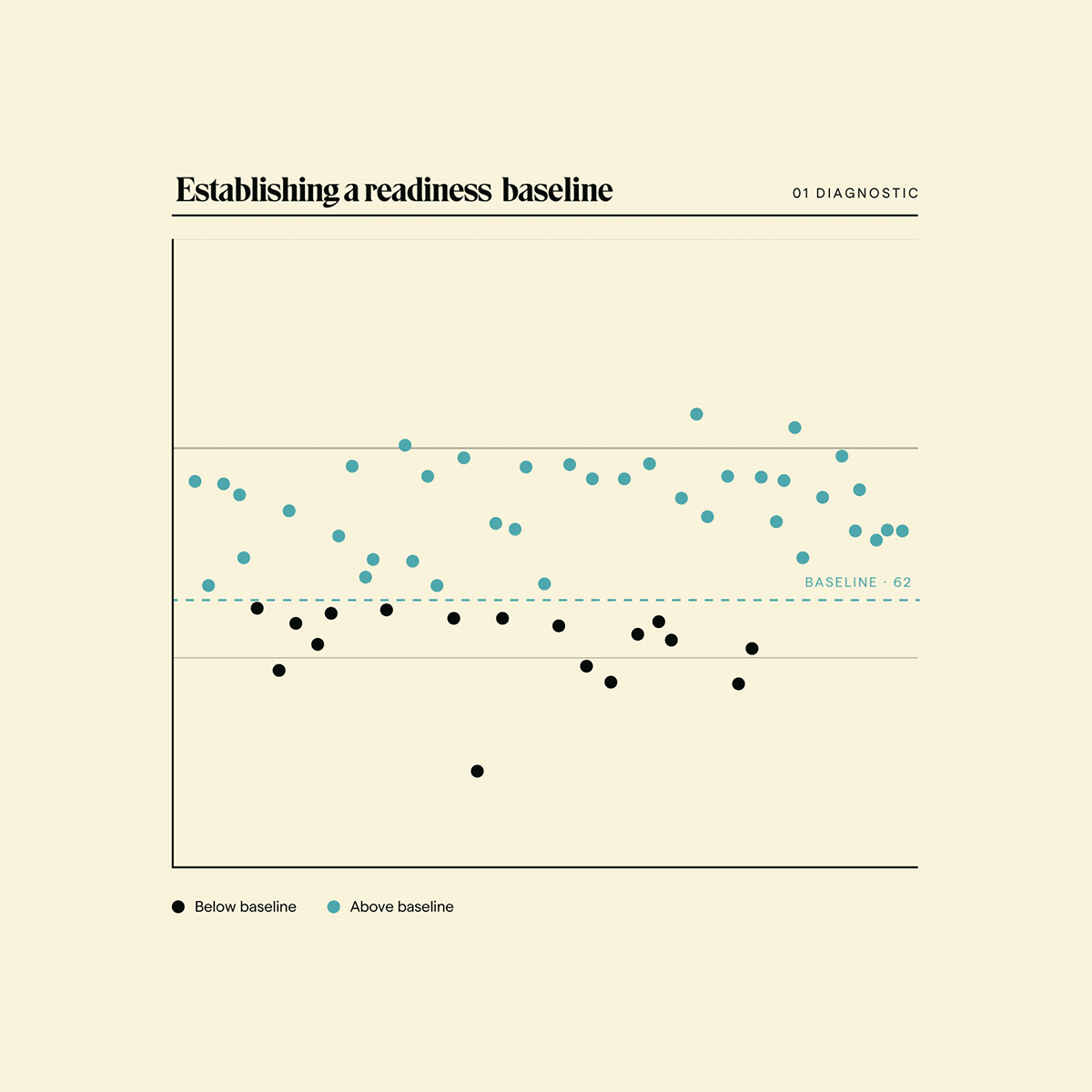
Every employee on the team or project completes the people readiness assessment. Results are summarized at the team and organizational level to establish the readiness baseline.

What you get

A readiness score at the team and organizational level. Individual profiles stay private to the person. Leadership receives a full debrief with the baseline data and an initial gap analysis.

Time Required

From your people: 10 minutes, once.
From leadership: one 60-minute debrief.
TPRC-Slider-01Diagnostic1200
Step 01. Week 1–2.

Diagnostic

Every employee on the team or project completes the people readiness assessment. Results are summarized at the team and organizational level to establish the readiness baseline.

What you get

A readiness score at the team and organizational level. Individual profiles stay private to the person. Leadership receives a full debrief with the baseline data and an initial gap analysis.

Time Required

From your people: 10 minutes, once.
From leadership: one 60-minute debrief.

Asset 1@2x
Step 02. Week 3.

Gap analysis

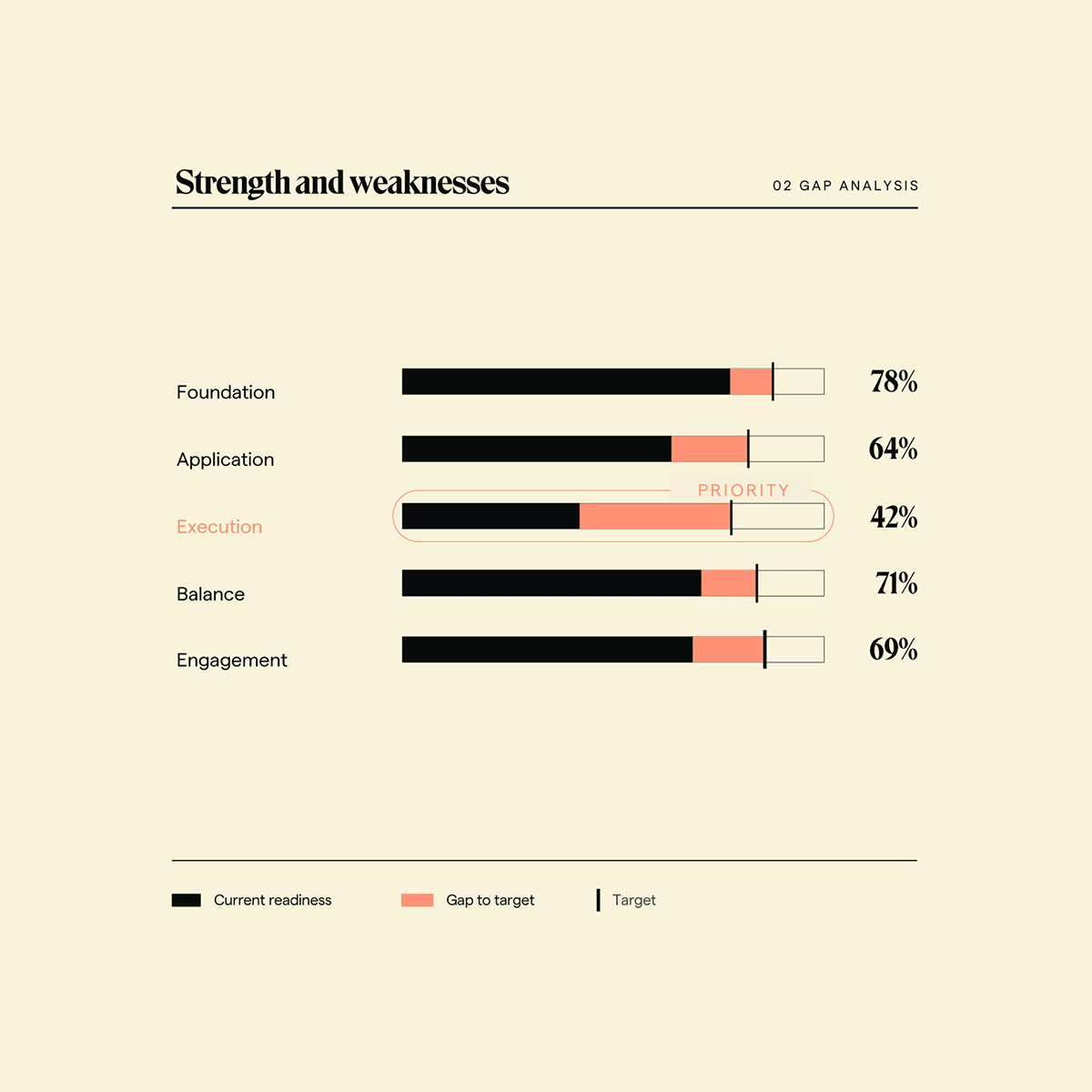
We walk leadership through the results. Together we identify where readiness is lowest and where building it will have the most impact on the current initiative. Development priorities are set on what the data shows, not on assumptions.

What you get

A development plan targeted to existing gaps. Clear priorities for the next ten weeks.

Time Required

From your people: none.
From leadership: one 60-minute session.
TPRC-Slider-02gap1200
Step 03. Week 4–12.

Development

Employees complete a short daily check-in that takes five to ten minutes. Every two weeks, a facilitated group session brings the team together to work on the specific areas the diagnostic identified. Our coaches track progress across all three instruments.

What you get

Live trend data you can check at any time. A facilitation report after each group session. Early signals when a team or individual is losing capacity.

Time Required

From your people: 5–10 minutes daily plus 45 minutes every two weeks. From leadership: one 10-minute progress update per month, by email.

TPRC-Slider-03Development1200
Step 04. Day 90.

Reassessment

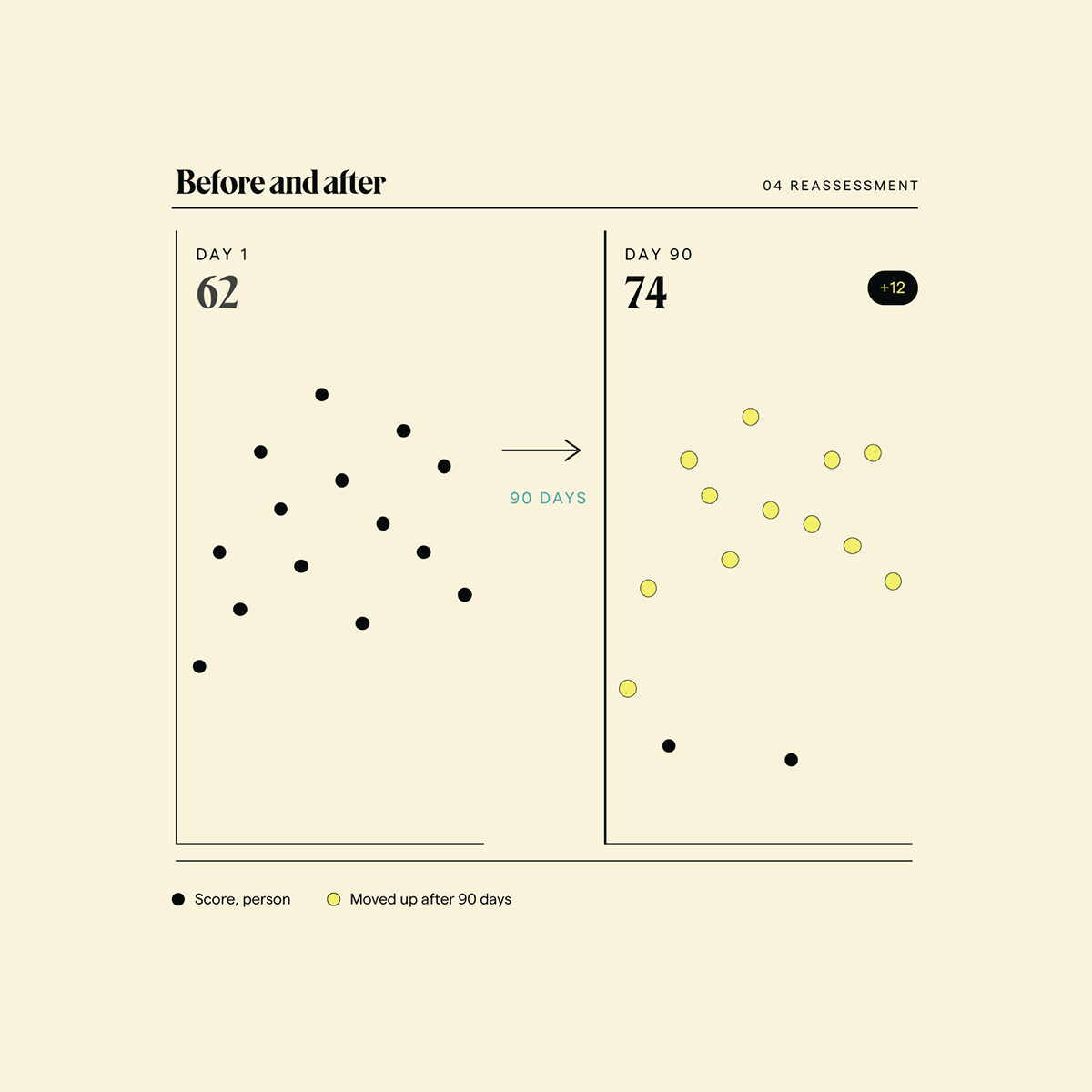
The same assessment from Day 1, repeated. Same people, same instrument. A new baseline is established. The events that shaped the cycle, including strategy shifts, team changes, and external pressure, are mapped against the readiness curve so leadership sees not just where the score moved, but what moved it.

What you get

A clear before-and-after picture. The numbers either moved or they did not. Leadership receives a full results debrief.

Time Required

From your people: 10 minutes, once.
From leadership: one 60-minute debrief.
TPRC-Slider-04Reassessment1200
Step 04. Every 90 days.

Ongoing cycle

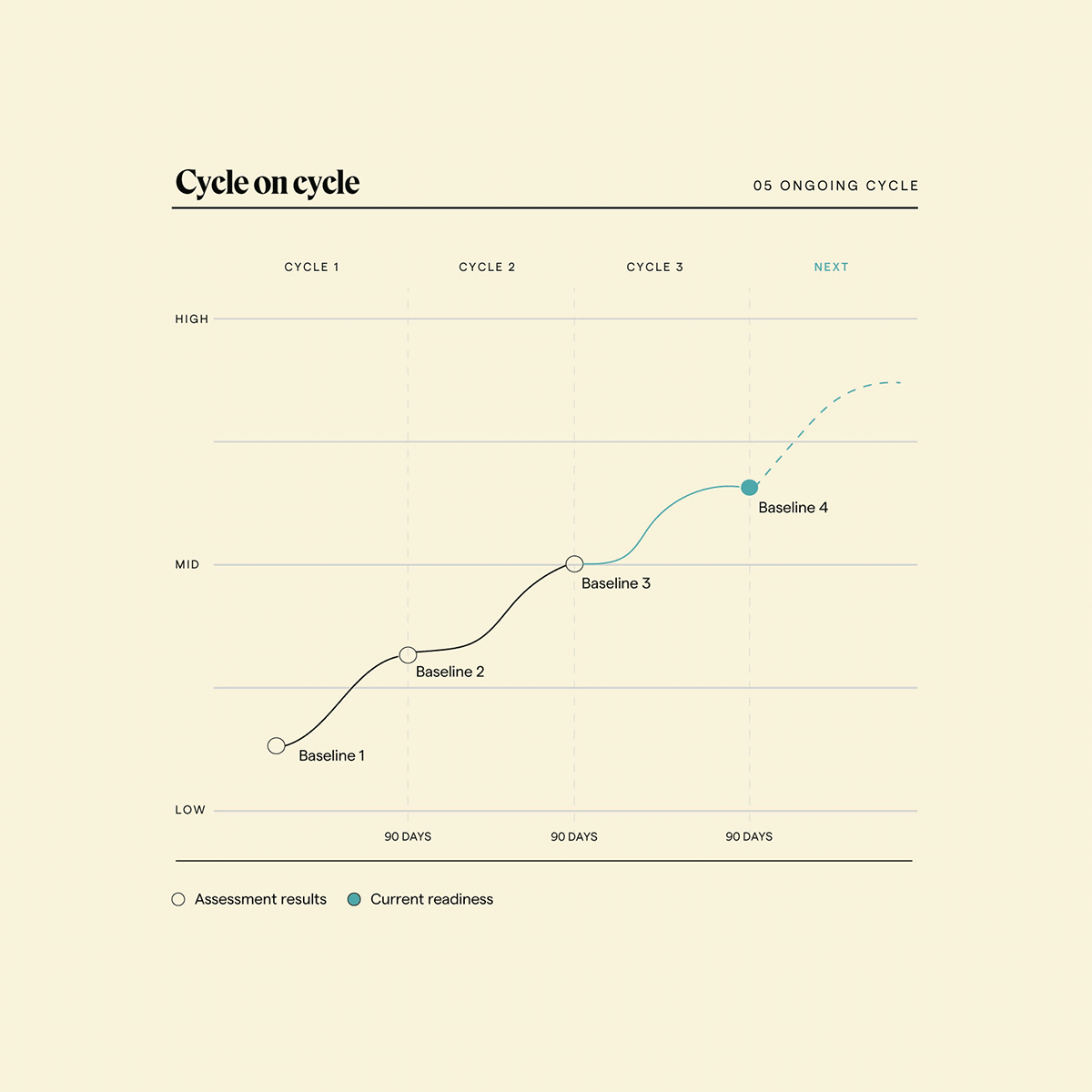
The cycle starts again. New priorities. New baseline. Readiness becomes a continuous metric, not a one-time project.

What you get

A score that stays current as the work changes. A team that keeps building. Data that compounds across cycles.

Time Required

Same rhythm. Same investment each cycle.
TPRC-Slider-05ongoing1200

Publication type


Type
TPRC Papers
Published
June, 2026
Pages
22
Format
PDF

Management summary.

Two teams. Same AI tools. Same training. Very different outcomes. The difference is rarely technical. It is human.

When leaders roll out new AI initiatives, they often focus on tools, training and processes. What they miss is the psychological layer underneath. The fears. The resistance. The quiet disengagement that determines whether an initiative truly takes hold or simply gets complied with.

This paper explores why people respond to AI-based change the way they do, and what leaders can do about it. At the core are three fundamental human needs that workplace AI initiatives often threaten: survival, context and autonomy. Understanding these needs is the starting point for any leader who wants to bring their people along rather than leave them behind.

From there the paper offers practical guidance in two areas.

The first is psychological safety, how leaders create the conditions where people feel secure enough to adapt, speak up and try new things. This starts with self-awareness, extends to shared values and shows up in daily leader behavior.

The second is conversation facilitation, how to actually talk to your people about AI in a way that builds trust. This includes how to respond to the most common reactions employees have, from job loss fears to learning overload to quiet disengagement, with concrete language you can use in the moment.

The paper closes with three simple first steps any leader can take right now. Because readiness is not a given. It is something you create.

What you will find inside.

How to facilitate psychological safety and effective conversations to guide your team through technological change.
01.
The impact of AI on fundamental human needs.Why people react the way they do, survival, context, autonomy. The three needs every leader hasto meet.
P. 04
02.
How leaders create psychological safety at work.Self-awareness, shared tenets, modeling behavior, and integrating values into policy.
P. 07
03.
Listen before you lead.Facilitating effective conversations about AI. Before, during, and after.
P. 11
04.
Put your people first.Common reactions, empathy, facts, and a written commitment to your team.
P. 14

Subscribe and download

Filling out this form helps us keep you in the loop on our work at TPRC. You will receive our newsletter (max every other week) and updates whenever we publish new research or papers. We do not contact you for any other reason. If you prefer to download without subscribing, that option is below.

Read next.