Skip to content

People-Readiness in der Praxis.

Strategien scheitern selten auf Folien. Sie scheitern in der Umsetzung. Dieses Paper zeigt, welche Rolle People Readiness dabei spielt.

Papers
EN

Konkret und praxisnah

Step 01. Week 1–2.

Diagnostic

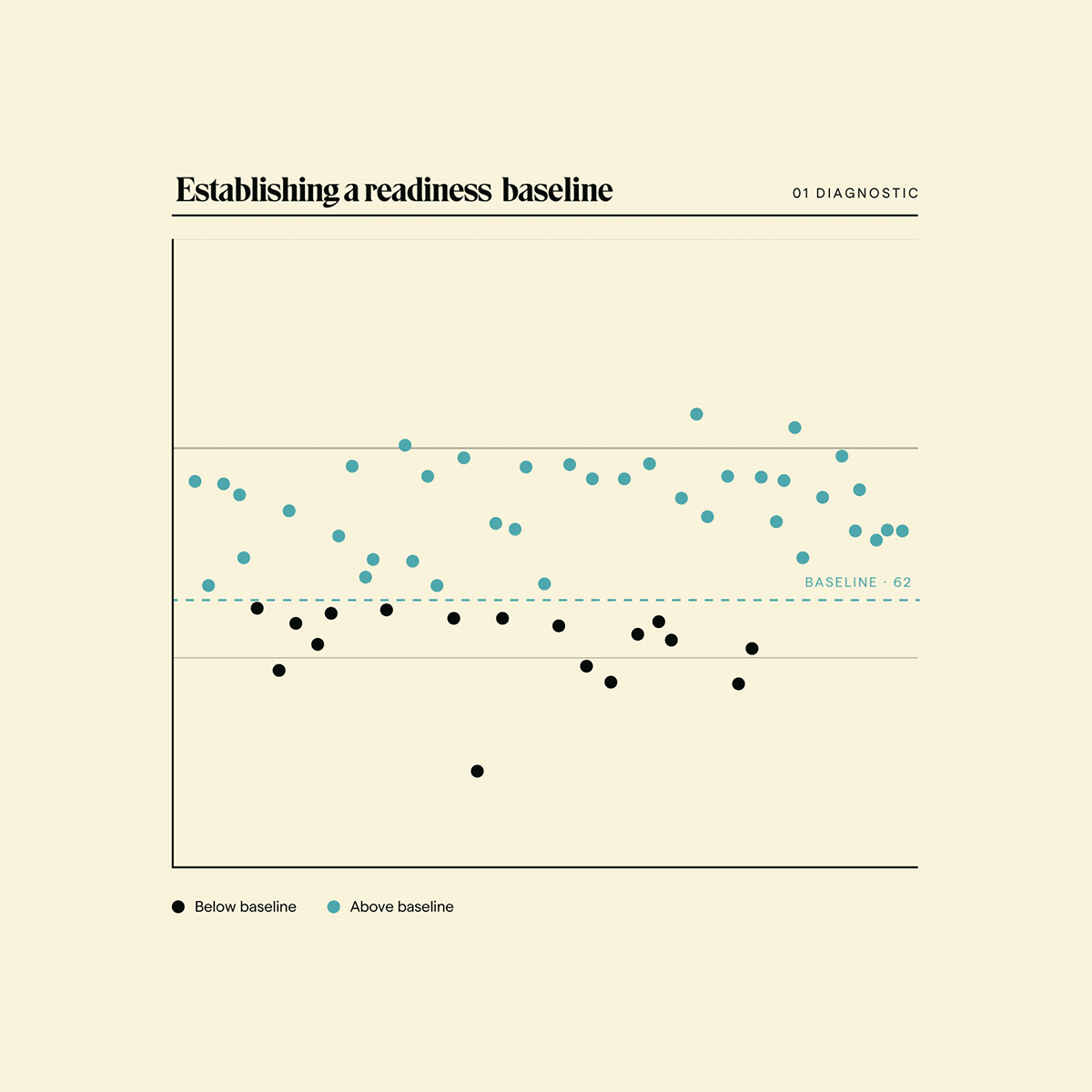
Every employee on the team or project completes the people readiness assessment. Results are summarized at the team and organizational level to establish the readiness baseline.

What you get

A readiness score at the team and organizational level. Individual profiles stay private to the person. Leadership receives a full debrief with the baseline data and an initial gap analysis.

Time Required

From your people: 10 minutes, once.
From leadership: one 60-minute debrief.
TPRC-Slider-01Diagnostic1200
Step 01. Week 1–2.

Diagnostic

Every employee on the team or project completes the people readiness assessment. Results are summarized at the team and organizational level to establish the readiness baseline.

What you get

A readiness score at the team and organizational level. Individual profiles stay private to the person. Leadership receives a full debrief with the baseline data and an initial gap analysis.

Time Required

From your people: 10 minutes, once.
From leadership: one 60-minute debrief.

Asset 1@2x
Step 02. Week 3.

Gap analysis

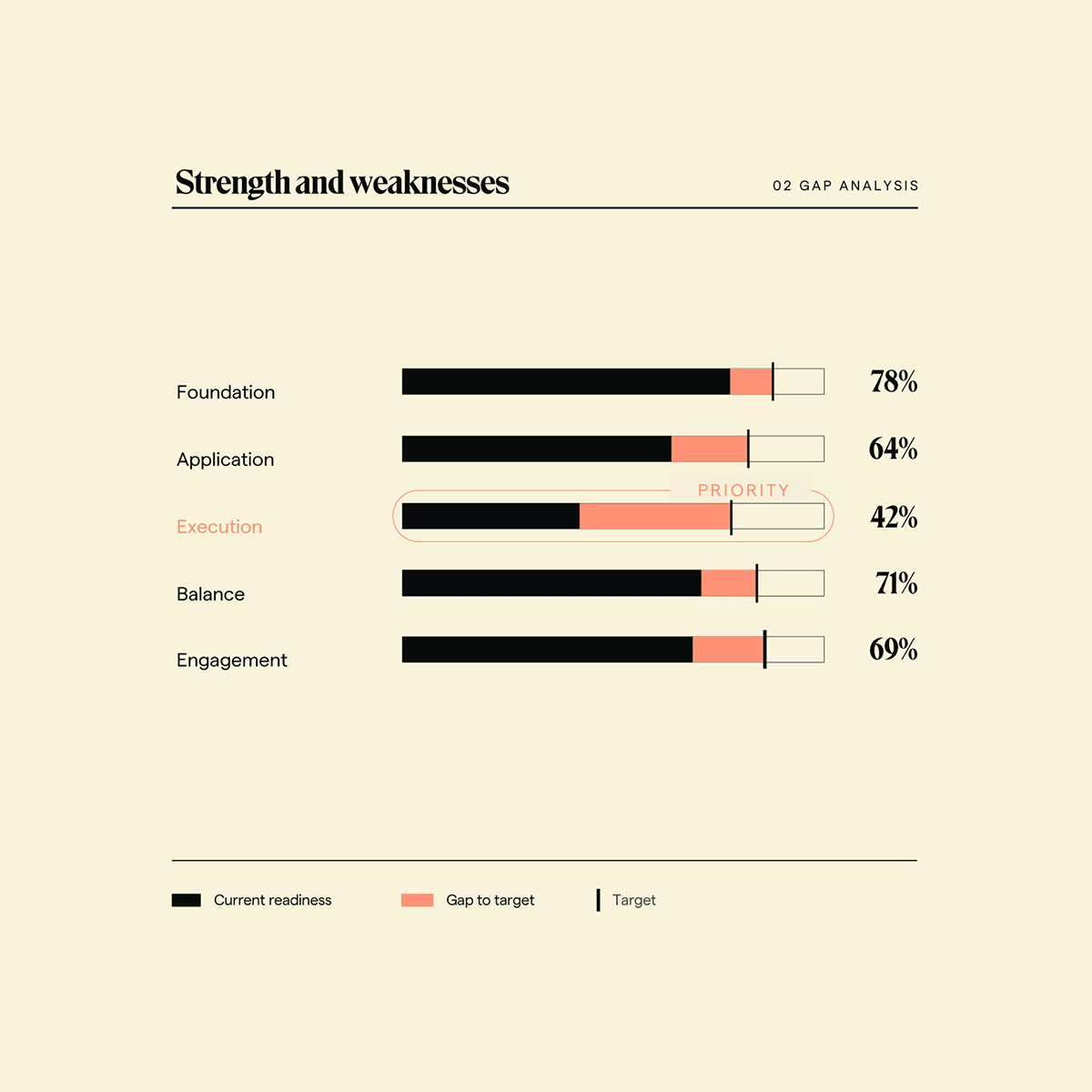
We walk leadership through the results. Together we identify where readiness is lowest and where building it will have the most impact on the current initiative. Development priorities are set on what the data shows, not on assumptions.

What you get

A development plan targeted to existing gaps. Clear priorities for the next ten weeks.

Time Required

From your people: none.
From leadership: one 60-minute session.
TPRC-Slider-02gap1200
Step 03. Week 4–12.

Development

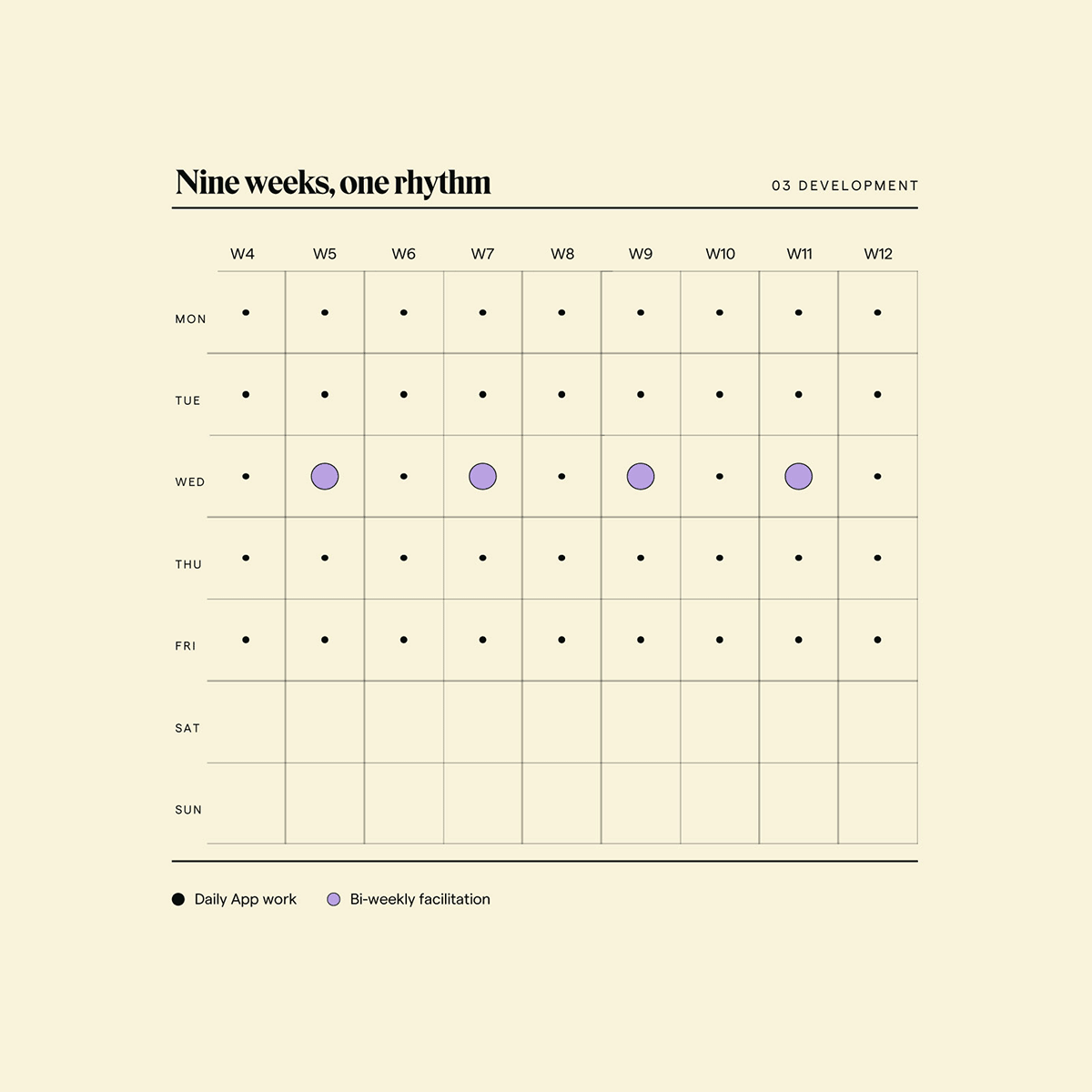
Employees complete a short daily check-in that takes five to ten minutes. Every two weeks, a facilitated group session brings the team together to work on the specific areas the diagnostic identified. Our coaches track progress across all three instruments.

What you get

Live trend data you can check at any time. A facilitation report after each group session. Early signals when a team or individual is losing capacity.

Time Required

From your people: 5–10 minutes daily plus 45 minutes every two weeks. From leadership: one 10-minute progress update per month, by email.
TPRC-Slider-03Development1200
Step 04. Day 90.

Reassessment

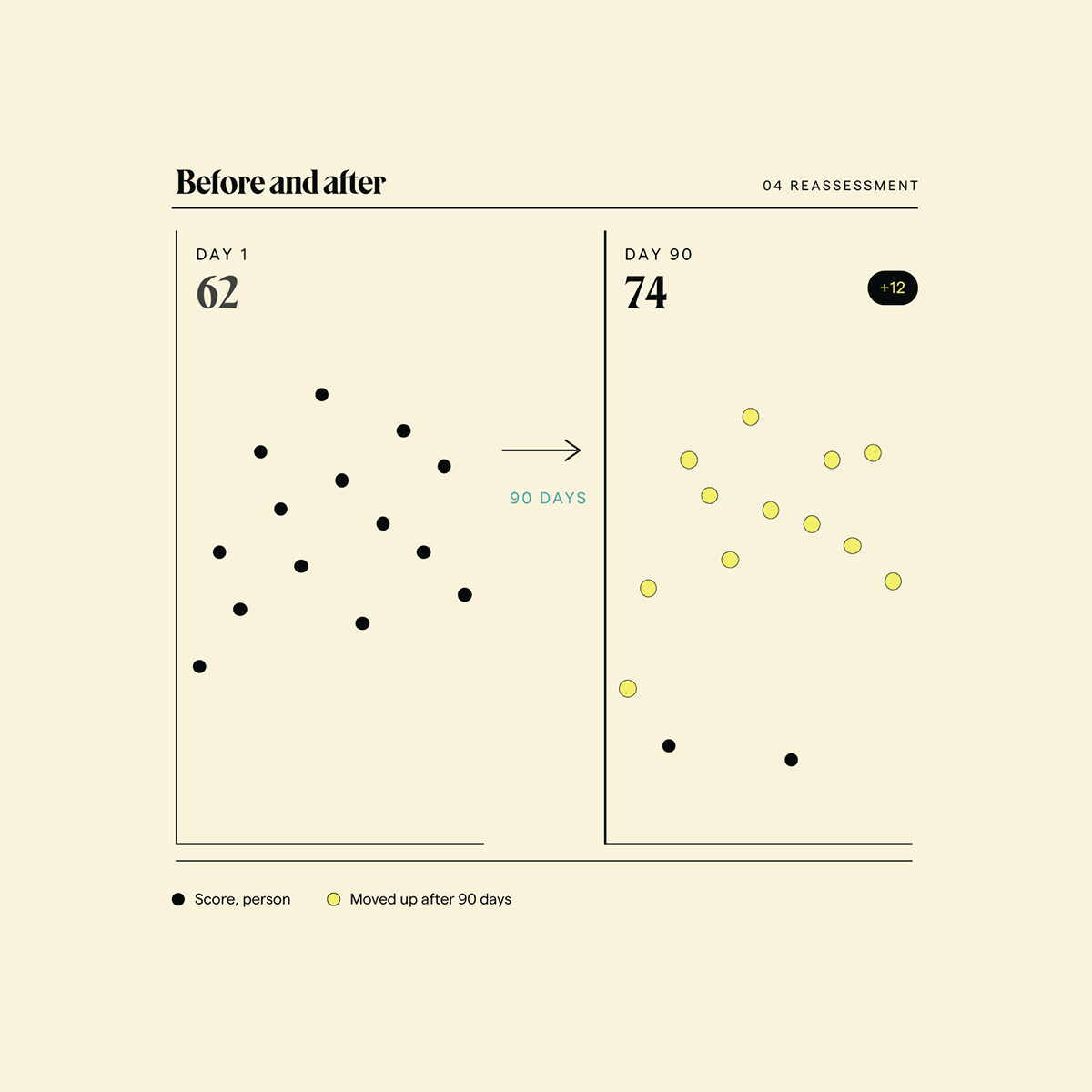
The same assessment from Day 1, repeated. Same people, same instrument. A new baseline is established. The events that shaped the cycle, including strategy shifts, team changes, and external pressure, are mapped against the readiness curve so leadership sees not just where the score moved, but what moved it.

What you get

A clear before-and-after picture. The numbers either moved or they did not. Leadership receives a full results debrief.

Time Required

From your people: 10 minutes, once.
From leadership: one 60-minute debrief.
TPRC-Slider-04Reassessment1200
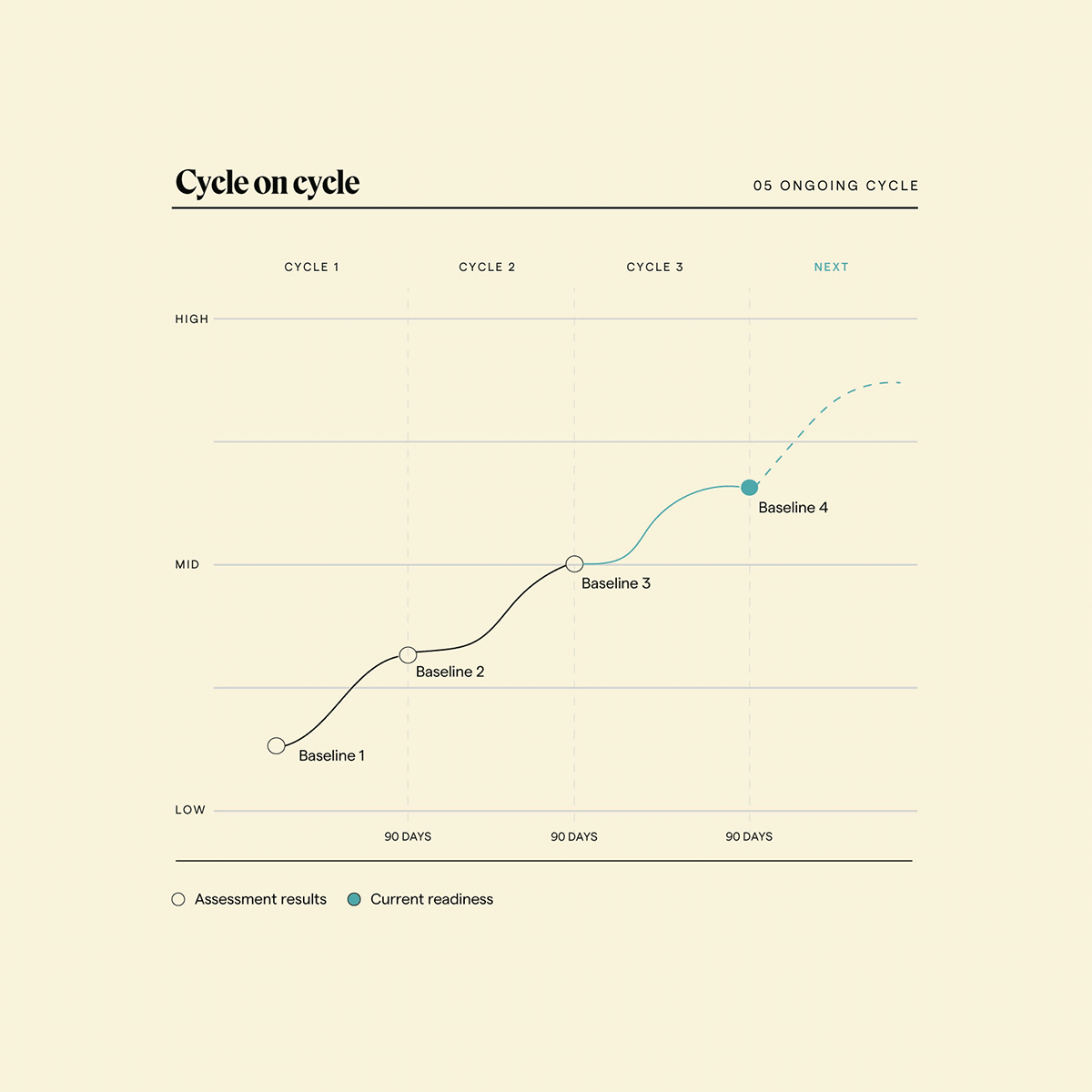
Step 04. Every 90 days.

Ongoing cycle

The cycle starts again. New priorities. New baseline. Readiness becomes a continuous metric, not a one-time project.

What you get

A score that stays current as the work changes. A team that keeps building. Data that compounds across cycles.

Time Required

Same rhythm. Same investment each cycle.
TPRC-Slider-05ongoing1200

Metadaten


Type
TPRC Papers
Published
June, 2026
Seiten
13
Format
PDF
Sprache
Englisch

Zusammenfassung.

Zwei Organisationen. Dieselbe Strategie. Dieselbe Technologie. Dieselbe Investition. Sehr unterschiedliche Ergebnisse.

Die Variable ist selten der Plan. Es sind die Mitarbeitenden, die ihn umsetzen sollen.

Organisationen investieren in Strategie, Technologie und Transformation. Was dabei häufig unsichtbar bleibt, ist die Fähigkeit eines Teams, die Veränderung tatsächlich zu tragen. Diese Variable nennen wir People Readiness.

People Readiness wird oft mit Engagement, Kultur oder Wohlbefinden verwechselt. Sie hängt mit allen drei zusammen, beschreibt aber etwas anderes: die Kapazität eines Teams, die Anforderungen von heute zu erfüllen und sich gleichzeitig an die Anforderungen von morgen anzupassen.

Dieses Paper führt in das Konzept der People Readiness ein. Es zeigt, warum sie heute zählt, wie sie sich messen lässt und wie Organisationen sie gezielt aufbauen können.

Denn erfolgreiche Transformation scheitern nicht an der Technologie. Sie scheitern an den Menschen, die sie umsetzen sollen.

Inhaltsverzeichnis

Eine Einführung in People Readiness: was sie ist, warum sie heute zählt und wie sie darüber entscheidet, ob aus Strategie Umsetzung wird.
01.
Everything Is PeopleWarum Transformationen selten an Strategie oder Technologie scheitern.
S. 03
02.
Was People Readiness istDie Definition, die vier Dimensionen und die drei Ebenen des Modells.
S. 04
03.
Warum sie heute zähltDie Bedingungen, die People Readiness zu einer strategischen Variable machen.
S. 5
04.
Die Readiness-LückeWarum zwischen Entscheidung, Umsetzung und Ergebnis häufig mehr liegt als gute Vorbereitung.
S. 06
05.
Wie sich People Readiness messen lässtDiagnostik, Pulse Tracking und Facilitation als integriertes System.
S. 07
06.
Eine Baseline, die sich bewegtWarum einmalige Messungen nicht ausreichen.
S. 08
07.
Wie ein Readiness Score entstehtDie Logik hinter dem Score und seiner Entwicklung im Zeitverlauf.
S. 09
08.
Was People Readiness verändertWie höhere Readiness die Umsetzung von Strategie beeinflusst.
S. 10
09.
Wer wir sind und was wir tunDie Arbeit von TPRC und der Hintergrund des Modells.
S. 11
10.
ProjektstartDrei Wege, um People Readiness in Ihrer Organisation aufzubauen.
S. 12

Abonnieren und herunterladen

Mit diesem Formular bleiben Sie über unsere Arbeit bei TPRC auf dem Laufenden. Sie erhalten unseren Newsletter (höchstens alle zwei Wochen) und eine Nachricht, wenn wir neue Forschung oder Papers veröffentlichen. Aus keinem anderen Grund melden wir uns bei Ihnen. Wenn Sie das Paper lieber ohne Abonnement herunterladen möchten, finden Sie die entsprechende Option weiter unten.